
Date: March 18, 2026
Main Focus : Scene Structure, System Architecture, and UI Layout.
Development Philosophy: “Notebook First”
The session began with the Notebook First method—separating the cognitive process (logic design and layout on paper) from the mechanical execution in Unity. This has been proven to significantly reduce development time by eliminating ambiguity during coding.
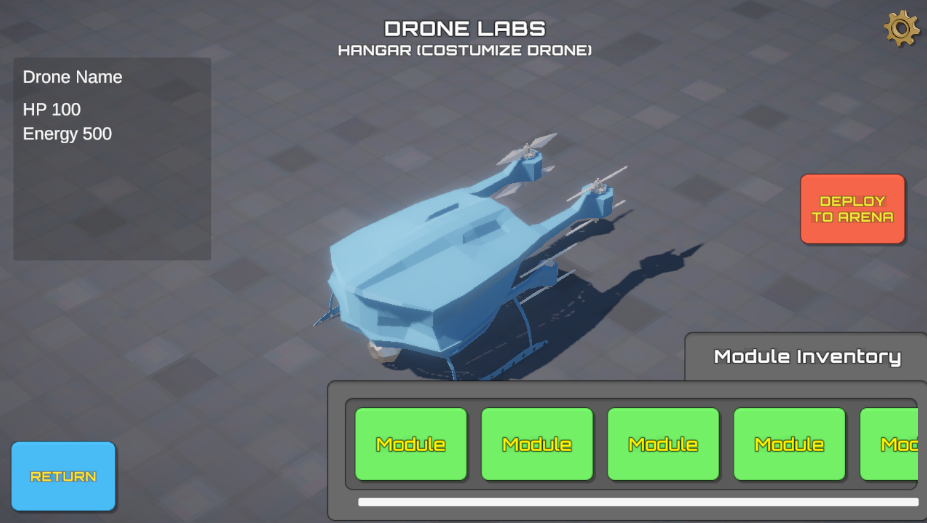
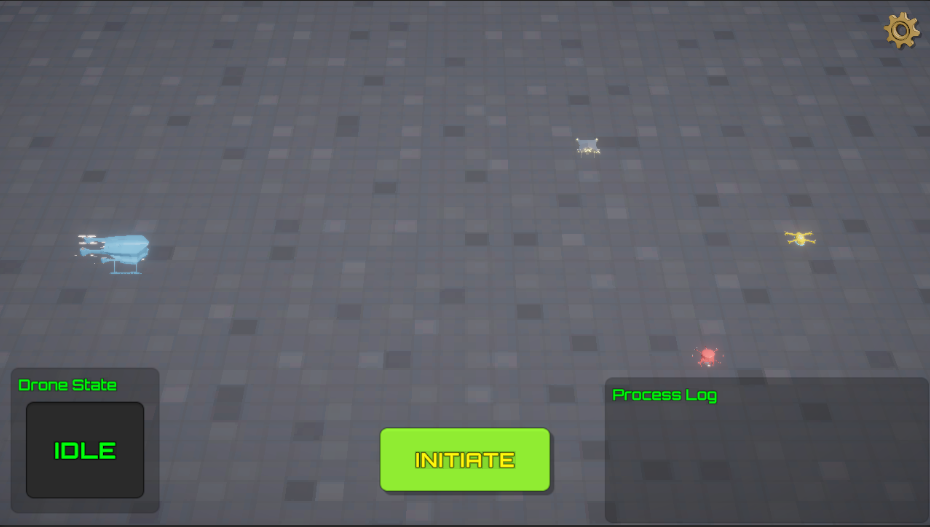
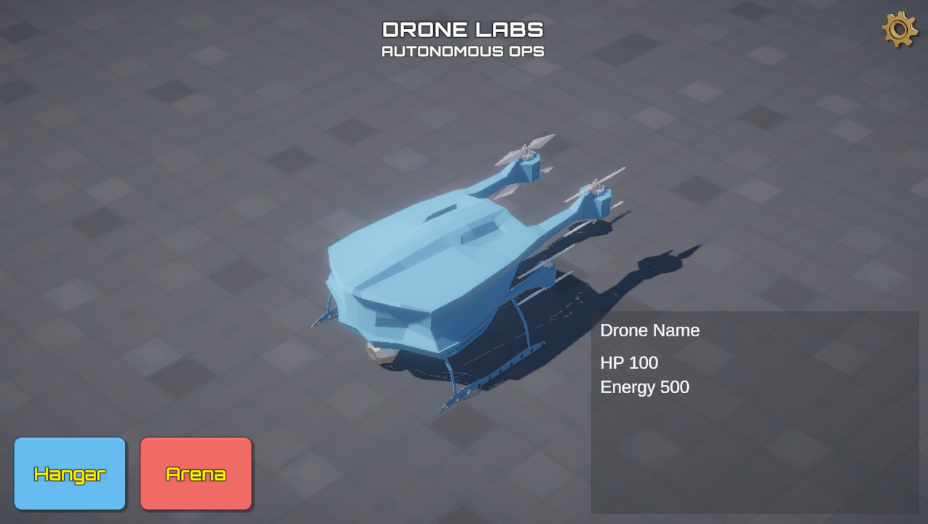
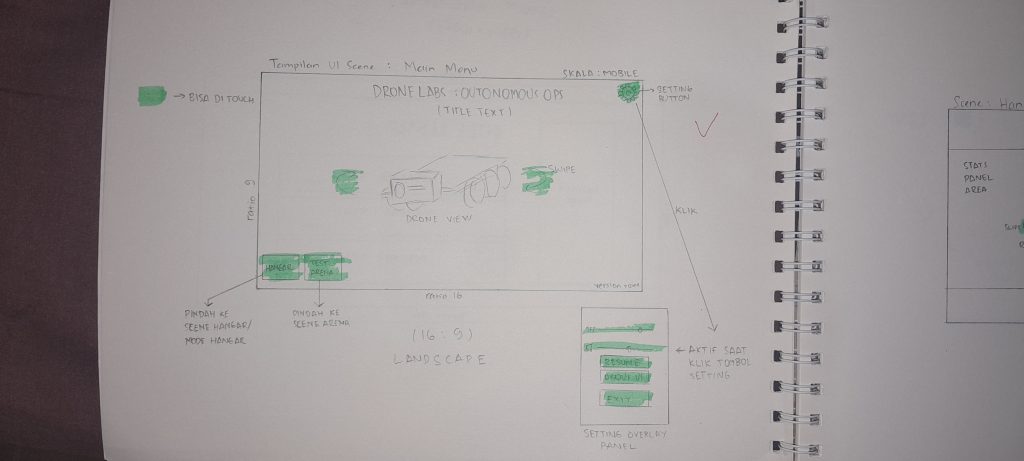
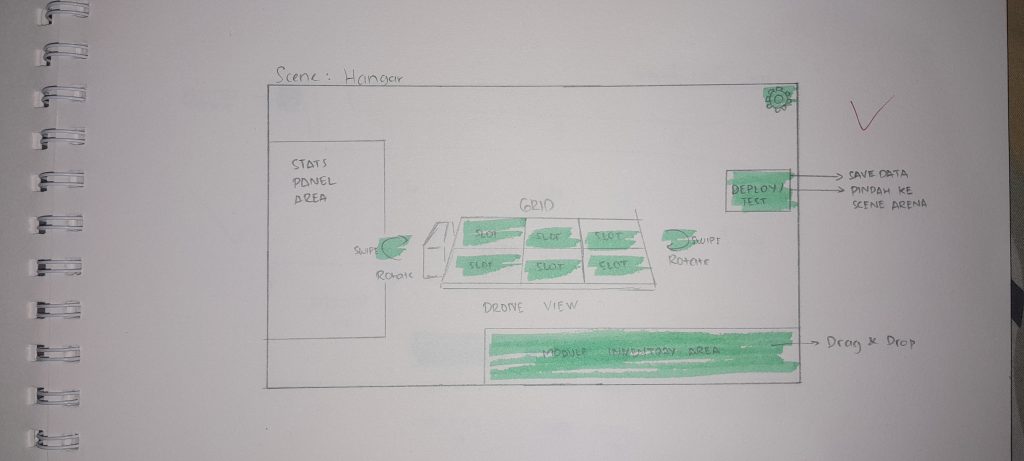
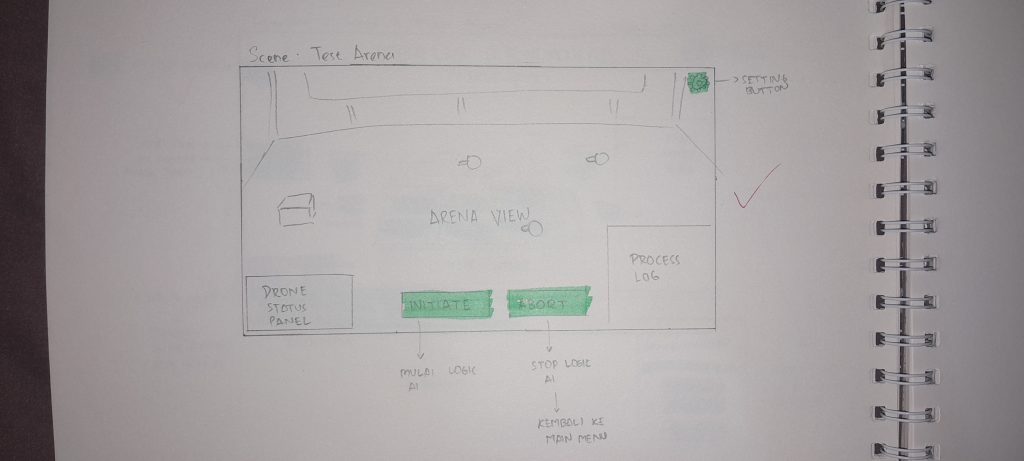
Scene Structure Efficiency (Scene Management)
Initially planned to have many separate scenes, but simplified (refactoring) was carried out for mobile application efficiency :
- Boot Scene : Implemented a procedural loading bar (2 seconds) for system initialization.
- Dashboard : Combined the main Dashboard function and drone assembly (Hangar) in a single scene. Transition between functions was done through UI Swapping for a more seamless user experience.
- Arena : A physical simulation space for autonomous AI testing.
Software Architecture: “The Brain & The Body”
Implementation of the Decoupling principle to hone the skills of a System Architect :
- The Brain : The AI control logic is written in pure C# (POCO) with no engine dependencies. This allows the AI logic to be portable and easily testable.
- The Body : MonoBehaviour in Unity acts as a wrapper or “hardware driver” that connects the “Brain” decisions with the physical world (Physics/Rigidbody).
- Global Controller : Uses GameManager as a Persistent Singleton (DontDestroyOnLoad) to maintain data flow between scenes.
Visual & Asset Milestones
- Implementation of the UI layout using the Unity UI Canvas.
- Integration of low-poly models as functional placeholders in the simulation arena.
- Preparation of a modular data system to support the disassembly and assembly of drone components.
Closing & Next Steps
Today’s session successfully completed all the visual foundations and basic data structures. The next target is to activate the assembly system with the Drag & Drop feature and start to embed autonomous “instincts” in the drone through a physical sensor system.